Altai Mountains 7-Day Itinerary: Chuya Highway & Olkhon Island
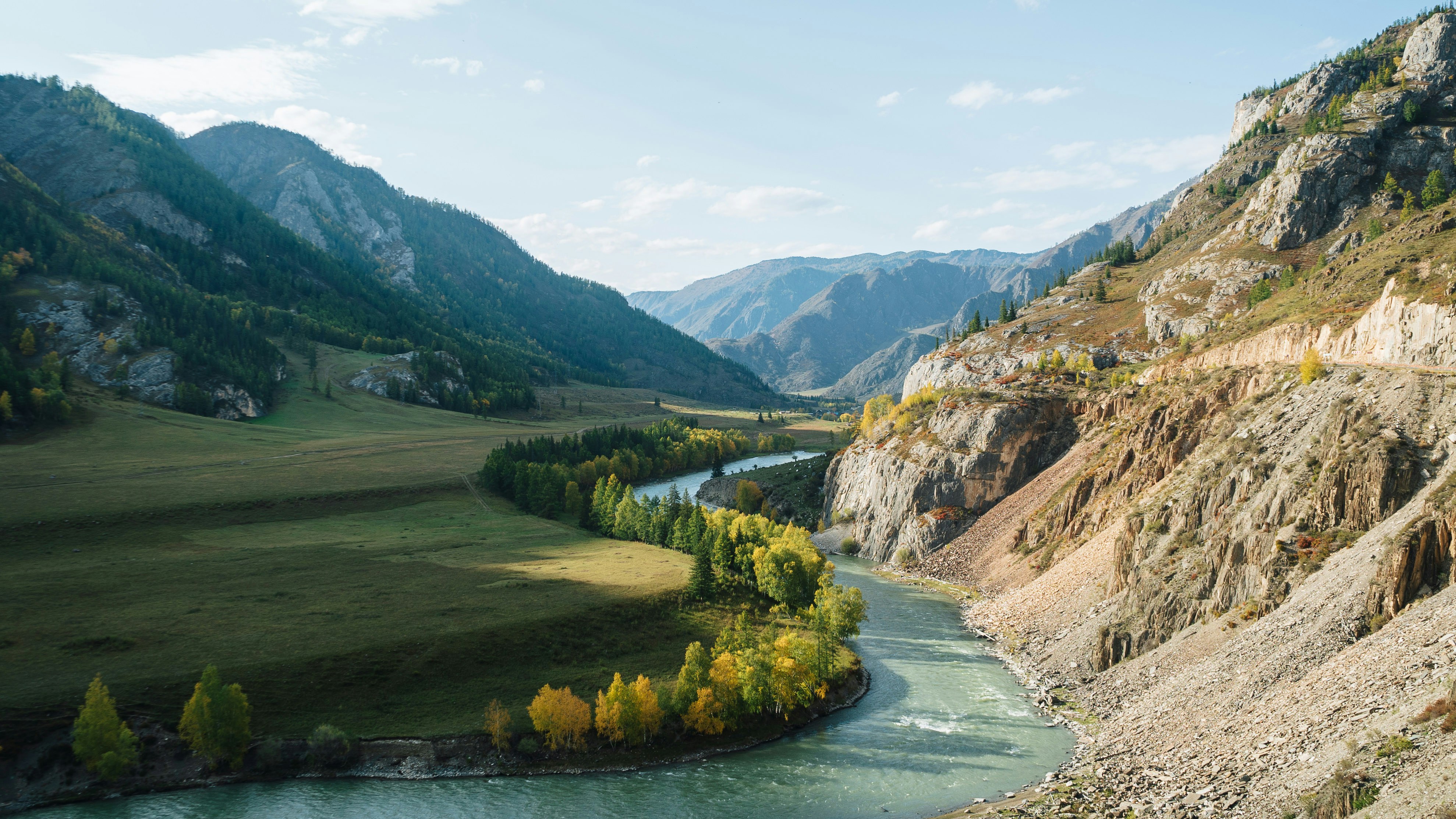
The Altai Mountains are Russia's most dramatic and remote highland region — turquoise rivers, snow-capped peaks rising above 4,000 metres, sweeping steppe valleys and one of the world's most scenic roads. In 7 days you can experience a dozen adventures: from white-water rafting to sleeping in a yurt under an unpolluted night sky.
In 7 days in the Altai Mountains you can visit Teletskoye Lake, the Chuya Highway, Chulychman River Valley and Katu-Yaryk Pass. Base city: Gorno-Altaysk. Budget from $280 to $900 per person including flights from Moscow, or $700–1800 including international connections.
Search flights to Altai (Gorno-Altaysk or Barnaul) on Aviasales — compare all airlines.
💰 7-Day Budget Breakdown
Estimate your total Altai trip budget with our free Trip Cost Calculator.
Expense | Budget | Comfort | Notes |
Flights to Gorno-Altaysk (round trip) | $140–220 | $280–420 | Direct flights on S7 from Moscow |
Car rental / 4WD tour | $70–120 | $180–300 | 4WD is essential for most roads |
Accommodation (7 nights) | $50–100 | $150–320 | Yurt camps, eco-lodges |
Food (7 days) | $40–70 | $90–160 | Local cuisine: kumiss, manti dumplings |
Activities & tours | $30–60 | $80–160 | Rafting, horse trekking, jeep tours |
TOTAL per person | ~$330–570 | ~$780–1360 |
💡 Pro tip: Renting a 4WD car with a group of 3–4 people and driving independently saves 40–50% compared to an organised tour. Many roads in Altai are unpaved mountain tracks — a regular car simply cannot pass.
🗓 Day-by-Day Itinerary
Day 1 — Arrival in Gorno-Altaysk
🌅 Morning: Arrive in Gorno-Altaysk, pick up your 4WD rental. The city sits at the confluence of the Biya and Katun rivers — a dramatic first introduction to Altai landscapes.
Rent a car for your Altai road trip via Rentalcars — essential for reaching the mountains and valleys.
☀️ Afternoon: Anokhin Museum — an excellent collection of Altai artefacts including the famous 'Altai Princess' mummy (a 2,500-year-old Scythian noblewoman found preserved in permafrost).
🌙 Evening: Dinner with Altai specialities — smoked venison, cedar nut honey and kumiss (fermented mare's milk) at a local cafe. Try to stay at a guesthouse rather than a chain hotel for atmosphere.
Day 2 — Teletskoye Lake
🌅 Morning: Drive from Gorno-Altaysk to Teletskoye Lake (240 km, ~4 hours along the Chuya Highway). Russia's second largest lake by volume after Baikal.
☀️ Afternoon: Boat trip to Korbu Waterfall (only accessible by water, ~$6–10) — the most spectacular waterfall on the lake. Float down the Biya River by kayak or raft if the season allows.
🌙 Evening: Stay overnight at Zolotoye Ozero (Golden Lake) resort or camp on the shore. Stars are extraordinary here — no light pollution for hundreds of kilometres.
Day 3 — The Chuya Highway
🌅 Morning: Begin driving the legendary Chuya Highway — rated by National Geographic as one of the most beautiful roads on Earth. Cross the Seminsky Pass (1,717m above sea level).
☀️ Afternoon: Chike-Tamanskiy Pass — a dramatic serpentine road with sweeping views over the valley below. Stop at the confluence of the Chuya and Katun rivers — the meeting of milky glacial water and clear turquoise is unforgettable.
🌙 Evening: Overnight in a yurt camp near Aktash village. Most camps include a communal dinner with local dishes.
Day 4 — Chulychman Valley
🌅 Morning: Descend into the Chulychman Valley via Katu-Yaryk Pass — a 4km zig-zag descent down a near-vertical cliff face. Even experienced drivers find this section extraordinary.
☀️ Afternoon: Stone Mushrooms of Achik — bizarre natural sculptures of blue clay capped with hard rock, carved by thousands of years of erosion. One of Altai's most surreal landscapes.
🌙 Evening: Camp overnight in the valley. The night sky here — at 1,600m altitude with zero light pollution — is among the best for stargazing and astrophotography in Russia.
Day 5 — Martian Landscapes & Return
🌅 Morning: Climb back out of the valley. Drive to Kyzyl-Chin — the 'Altai Mars': an otherworldly landscape of multicoloured clay hills in reds, oranges and purples.
☀️ Afternoon: Kurai Steppe — a vast open plateau with direct views of the North Chuya Ridge, whose peaks exceed 4,000m. One of the most dramatic panoramas in all of Russia.
🌙 Evening: Drive to Chemal — a popular resort village with thermal springs and a more developed tourist infrastructure. Good base for the final two days.
Day 6 — Chemal: Activities
🌅 Morning: Chemal Hydroelectric Dam and Patmos Island — a rock island in the middle of the river with a small Orthodox monastery, accessible via a hanging footbridge.
☀️ Afternoon: White-water rafting on the Katun River (2 hours, $25–40/person including equipment). Optional: zipline over the river canyon — a thrilling finale.
🌙 Evening: Traditional Altai banya (sauna) with mountain herb steam. Most lodges offer this for $10–15/hour. A perfect way to recover after days of driving and hiking.
Day 7 — Return & Departure
🌅 Morning: Drive back to Gorno-Altaysk (120 km, ~2 hours). Market stop: Altai honey (the cedar and phacelia varieties are extraordinary), cedar nuts and mountain herb teas.
☀️ Afternoon: Return car, fly back to Moscow or onward destination.
🏨 Where to Stay
Book accommodation in Altai on Ostrovok — eco-lodges, glamping and guesthouses available.
Type | Price/night | Location | Description |
Yurt camp | $20–45 | Aktash, Chuya Valley | Authentic experience, dinner included |
Eco-lodge / resort | $30–65 | Teletskoye Lake, Chemal | Wooden cabins by the water, banya |
Glamping | $60–120 | Chemal, Katun River | Comfort + nature, stunning views |
Guesthouse | $12–22 | Gorno-Altaysk | For first and last night in the city |
💡 Essential Tips
A 4WD vehicle is non-negotiable — Subaru Forester or Toyota RAV4 minimum. Many roads are impossible in a standard car, especially after rain
Best season: June–September. In May roads are muddy after winter. By October passes can already see frost and snow
Mobile signal disappears after Gorno-Altaysk — download Maps.me with Altai offline maps before you leave
Cash only in most places — withdraw money in Biysk or Gorno-Altaysk. Most yurt camps and guesthouses don't accept cards
Even in summer, passes and the Chulychman Valley are cold — pack a warm mid-layer and waterproof jacket regardless of forecast
Travel insurance with emergency evacuation coverage is strongly recommended — in the mountains help is expensive, signal-free and far away
❓ Frequently Asked Questions
When is the best time to visit the Altai Mountains?
July and August offer the best conditions: rivers are full, all passes are open, wildflowers are blooming and temperatures are comfortable (15–25°C in the valleys). June and September are also good but cooler. Winter Altai is stunningly beautiful in snow but most roads close.
Do I need a visa to visit the Altai Mountains?
The Altai Republic is a regular region of Russia — the same visa rules apply as for the rest of the country. EU and US citizens need a Russian visa (apply at your nearest Russian consulate). Some nationalities qualify for an e-visa valid for 16 days — check current entry requirements well before booking.
How do I get to the Altai Mountains from Moscow?
Fly Moscow–Gorno-Altaysk: 3.5 hours, from $140–300 return (S7 Airlines operates direct flights). Alternatively fly to Novosibirsk (cheaper at $100–200 return) and drive 6 hours — this adds a day but allows a stop in Biysk, the gateway to the Chuya Highway.
Is special equipment needed for an Altai trip?
For a car-based itinerary — no specialist gear needed beyond warm layers and good hiking boots. For trekking to Mount Belukha (Russia's highest peak at 4,509m) you need crampons, ice axe and ideally a guide. For rafting — the company provides wetsuits and helmets. Always bring a basic first-aid kit.
Is the Altai region safe for foreign tourists?
Yes — the Altai Republic is a peaceful and welcoming region. The main risks are typical of any remote mountain environment: unpredictable weather, poor roads and limited medical facilities. The local population is a mix of ethnic Altai people and Russians and is generally very hospitable to visitors.