China in 10 Days — Complete Travel Guide 2026
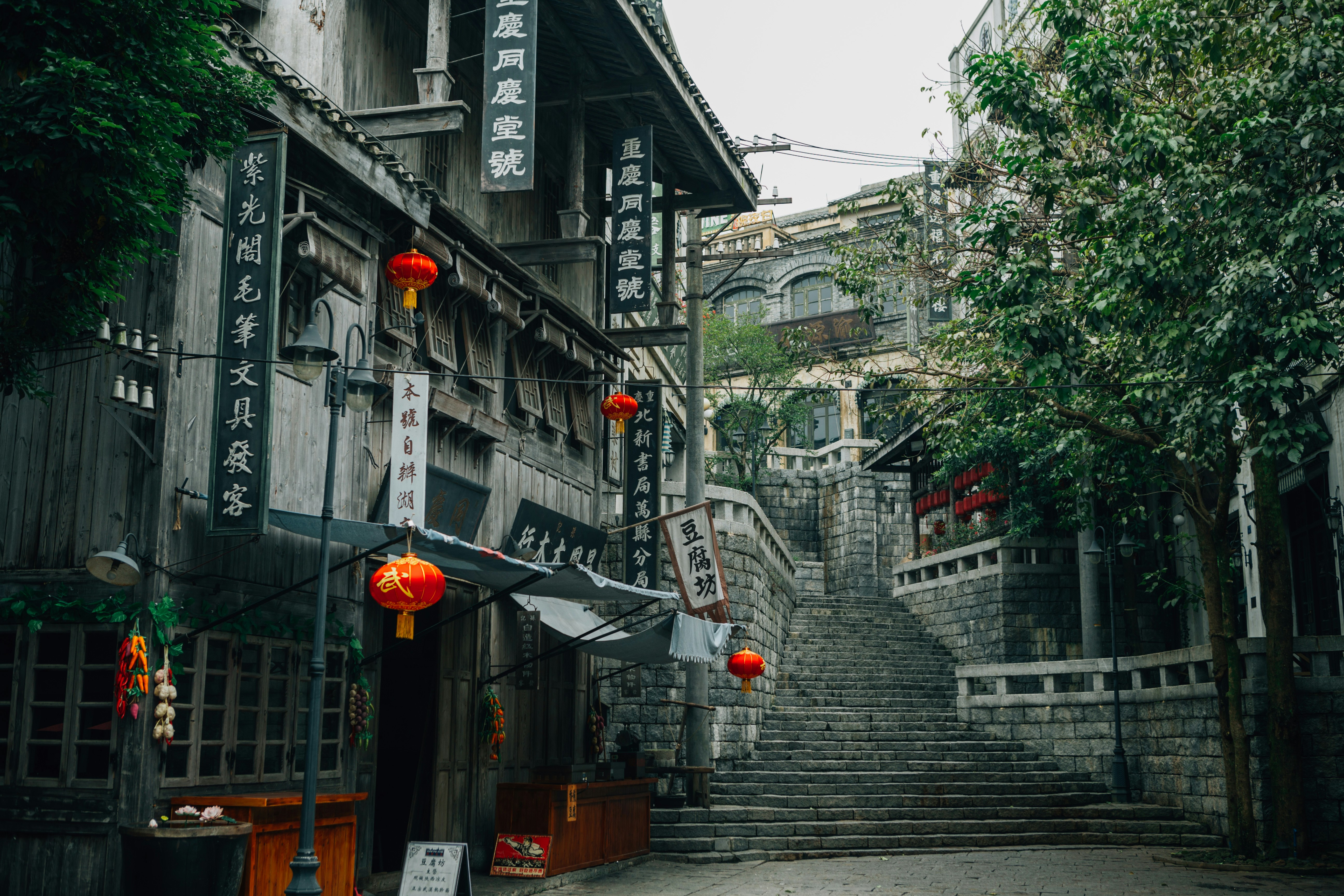
In 10 days in China you can cover Beijing, Xi'an, Chengdu and Shanghai by high-speed rail — the four cities that define Chinese civilisation from ancient imperial capitals to ultra-modern megacities. Budget from $600 to $1,800 per person including international flights from Moscow. Russian citizens can enter visa-free for up to 30 days in 2026.
China is one of the most rewarding and overwhelming destinations on earth — a country where the world's longest continuous civilisation left behind palaces, terracotta armies and sacred mountains, and where the 21st century built bullet trains, neon skylines and cashless cities faster than anywhere else. The Beijing–Xi'an–Chengdu–Shanghai route is the classic introduction: four cities, four completely different atmospheres, one of the greatest rail journeys in the world connecting them.
Search flights to China (Beijing or Shanghai) on Aviasales — compare all airlines including budget carriers.
💰 10-Day Budget Breakdown
Estimate your total China trip budget with our free Trip Cost Calculator.
Expense | Budget | Comfort | Notes |
|---|---|---|---|
Flights to Beijing, Shanghai | $400–600 | $700–1,100 | Prices vary significantly by origin city — search 6–8 weeks ahead for best fares |
High-speed rail between cities | $60–100 | $100–160 | Beijing–Xi'an–Chengdu–Shanghai, 2nd/1st class |
Accommodation (10 nights) | $45–80/night | $130–250/night | Budget hotels to 4-star international chains |
Food (10 days) | $15–25/day | $40–80/day | Street food and local restaurants are excellent value |
Activities & entrance fees | $80–130 | $160–280 | Great Wall, Terracotta Army, Panda Base, museums |
Local transport (metro, Didi) | $20–35 | $40–70 | Metro is extensive and cheap in all four cities |
TOTAL per person | ~$900–1,500 | ~$2,000–3,500 |
💡 Pro tip: Book high-speed rail tickets on Trip.com at least 2–3 weeks in advance, especially for peak dates. Trains sell out faster than flights and cannot be booked at the station without a Chinese ID — foreign passports work at station windows but queues are long.
🗓 Day-by-Day Itinerary
Day 1 — Arrival in Beijing
🌅 Morning: Arrive at Beijing Capital Airport (PEK) or Daxing Airport (PKX). Take the Airport Express train to the city centre — fast, cheap and clearly signed in English.
Or pre-book your airport transfer via Kiwi Taxi — fixed price from PEK, PVG or CAN airports.
☀️ Afternoon: Check in and walk to Tiananmen Square — the largest public square in the world. The sheer scale is disorienting in the best possible way. From there, the entrance to the Forbidden City is immediately to the north.
🌙 Evening: Explore the Wangfujing pedestrian street for dinner — duck into the side alleys for Peking duck, dumplings and scallion pancakes at local prices rather than tourist restaurants on the main strip.
Day 2 — Beijing: Forbidden City & Hutongs
🌅 Morning: Spend the full morning inside the Forbidden City (book tickets online in advance — walk-up entry is limited). 9,999 rooms, 600 years of imperial history. Walk the central axis north to south for the full ceremonial sequence.
☀️ Afternoon: Exit through the north gate into Jingshan Park — climb the pavilion for the best aerial view of the Forbidden City and the city beyond. Then descend into the hutong neighbourhood of Nanluoguxiang: narrow alleyways, courtyard houses, independent cafes.
🌙 Evening: Rickshaw tour through the hutongs at dusk — offered by local guides from Houhai Lake area (~$15–20/person). End the evening at Houhai Lake with drinks at the waterfront.
Day 3 — Beijing: Great Wall
🌅 Morning: Early start to the Mutianyu section of the Great Wall (90 minutes from central Beijing by tour bus or private transfer). Arrive before 9am to beat the crowds. The Mutianyu section is better preserved and far less crowded than Badaling.
☀️ Afternoon: Take the cable car up and walk a 2km section along the ridge — watchtowers, stairways at 45-degree angles, and views over forested hills stretching to the horizon. Return by toboggan for an unexpectedly fun descent.
🌙 Evening: Return to Beijing. Summer Palace if energy allows — a lakeside imperial garden 20 minutes from the city. Dinner in the Sanlitun district: more international options and a livelier evening atmosphere.
Day 4 — Beijing → Xi'an by High-Speed Rail
🌅 Morning: High-speed train from Beijing West to Xi'an North (4.5 hours, from $35 in 2nd class). Book a window seat on the left side heading south for the best views. The journey passes through the Yellow River basin — China's agricultural heartland.
☀️ Afternoon: Arrive in Xi'an and walk the Ancient City Wall — the most complete surviving city wall in China, 14km long and wide enough to cycle on top. Rent a bike at the South Gate (~$4/hour) and complete the circuit in 1.5 hours.
🌙 Evening: Dinner in the Muslim Quarter (Huimin Jie): Xi'an's most famous food street, lined with stalls selling lamb skewers, pita bread stuffed with braised meat (roujiamo), and pomegranate juice. Crowded, loud and unforgettable.
Day 5 — Xi'an: Terracotta Army
🌅 Morning: Full morning at the Terracotta Army (45 minutes east of Xi'an by bus or tour car). Pit 1 is the largest — 6,000 life-sized soldiers in battle formation, every face individually sculpted. Arrive at opening (8:30am) to see it without crowds.
☀️ Afternoon: Pit 2 and the museum building with close-up displays of individual figures, including the only painted warrior yet excavated. The scale of what remains unexcavated — the emperor's actual tomb mound is 2km away and untouched — is staggering.
🌙 Evening: Return to Xi'an. Tang Dynasty Show if cultural performances appeal — a traditional music and dance show that gives context to the Tang era (618–907 AD), Xi'an's golden age as the eastern terminus of the Silk Road.
Day 6 — Xi'an → Chengdu by High-Speed Rail
🌅 Morning: High-speed train Xi'an to Chengdu (3.5 hours, from $30 in 2nd class). The route passes through Qinling Mountain tunnel — one of the longest rail tunnels in the world.
☀️ Afternoon: Arrive in Chengdu and head to Jinli Ancient Street — a restored Qing Dynasty commercial street with teahouses, craft shops and Sichuan street food. Try the dan dan noodles and mapo tofu from a street stall, not a tourist restaurant.
🌙 Evening: Sichuan hot pot dinner — the defining Chengdu experience. Choose a locally popular restaurant rather than a chain (queue for 30–40 minutes on weekday evenings). The broth is Sichuan peppercorn and chilli — numbing, fiery and addictive.
Day 7 — Chengdu: Giant Pandas
🌅 Morning: Early start to the Chengdu Research Base of Giant Panda Breeding (open from 7:30am — arrive early as pandas are most active before 10am, after which they sleep). Around 80 giant pandas in a forest setting that feels nothing like a zoo.
☀️ Afternoon: Wuhou Shrine — the memorial temple to Zhuge Liang, the most celebrated military strategist in Chinese history. Peaceful garden complex with a thousand-year-old ginkgo tree.
🌙 Evening: Sichuan opera performance at Shufeng Yayun teahouse — a 90-minute show including the legendary face-changing (bianlian) act, where performers switch silk masks in under a second. Book in advance ($20–35/person).
Day 8 — Chengdu → Shanghai by High-Speed Rail
🌅 Morning: High-speed train Chengdu to Shanghai (11 hours — or fly in 3 hours if you prefer). The overnight train is a good option: book a soft sleeper berth (~$60) and wake up in Shanghai.
☀️ Afternoon: Arrive in Shanghai. Walk the Bund waterfront: a 1.5km stretch of colonial-era banking and trading houses facing the futuristic Pudong skyline across the river. One of the world's great urban contrasts, visible from a single viewpoint.
🌙 Evening: Take the ferry across the Huangpu River to Pudong (¥2, 10 minutes) and go up the Shanghai Tower observation deck on the 118th floor — the second tallest building in the world. The view of the Bund lit up at night is extraordinary.
Day 9 — Shanghai: French Concession & Yu Garden
🌅 Morning: French Concession neighbourhood: tree-lined avenues, art deco villas, independent coffee shops and boutiques. Walk Wukang Road — Shanghai's most photographed street, lined with plane trees and early 20th-century mansions.
☀️ Afternoon: Yu Garden and the Old City: a classical Ming Dynasty garden surrounded by a covered bazaar selling silk, pearls and jade. Have xiaolongbao (soup dumplings) at Nanxiang Mantou Dian — one of Shanghai's most famous dumpling houses, on the edge of the garden.
🌙 Evening: Final dinner at a rooftop restaurant on the Bund side — the view of Pudong across the river is the best goodbye to China you can arrange. The Captain's Bar (a Shanghai institution) on Fuzhou Road offers similar views at a fraction of the cost.
Day 10 — Departure from Shanghai
🌅 Morning: Maglev train from Longyang Road metro station to Pudong Airport (PVG) — the world's fastest commercial train, reaching 430 km/h, and covering the 30km in 8 minutes. A fittingly extreme finale to a China trip.
☀️ Afternoon: Fly home. Stopover options via Almaty, Istanbul or Dubai depending on your carrier.
🏨 Where to Stay
City | Budget Option | Price/night | Comfort Option | Price/night |
|---|---|---|---|---|
Beijing | $70–80 | $120–180 | ||
Xi'an | $50–75 | $160–250 | ||
Chengdu | $100–120 | $150–230 | ||
Shanghai | $100–120 | $200–2300 |
💡 Essential Tips
VPN is non-negotiable — Google, Instagram, WhatsApp and Telegram are blocked in mainland China. Download NordVPN or ExpressVPN before you leave home; it cannot be installed once you're inside China
Set up WeChat Pay before arrival — China operates almost entirely on mobile payment. Link an international Visa or Mastercard to WeChat Pay before departure. Most street vendors, restaurants and markets no longer accept cash
Download offline maps — Google Maps does not work in China. Download Maps.me with China offline maps, or use Baidu Maps (in Chinese only). The metro maps in all four cities are available offline in Citymapper
Book train tickets early — High-speed rail on popular routes (Beijing–Xi'an, Chengdu–Shanghai) sells out 2–3 weeks ahead on peak dates. Use Trip.com with your passport number
Carry your passport at all times — Chinese hotels, train stations and some attractions require passport verification. A photocopy is not accepted
Best season: April–May and September–October — Spring and autumn offer mild weather across all four cities. Summer (June–August) is hot and humid everywhere; the Great Wall and Terracotta Army are miserable in 35°C heat and rain
Currency: Yuan (CNY / RMB) — withdraw at airport ATMs on arrival or use WeChat Pay. Russia's Mir card works at some Chinese bank ATMs (Agricultural Bank of China, Bank of China) — test before you leave the airport
Get a China eSIM via Airalo — essential, local SIM requires a Chinese phone number to activate.
Travel insurance via EKTA or Cherehapa — recommended even without a visa requirement.
❓ Frequently Asked Questions
Is it safe to travel in China as a foreigner?
China is one of the safest countries in the world for tourists by any measurable standard. Petty crime is rare, violent crime against tourists is exceptional, and cities are extremely well lit and monitored. The main practical difficulties are the language barrier, internet restrictions, and navigating the cashless payment system — none of which are safety issues.
What should I know about internet access in China?
The Great Firewall blocks Google, Meta (Instagram, WhatsApp, Facebook), YouTube, Twitter/X, Telegram, and most Western news sites. A VPN is the only solution — and it must be installed before you enter China, as VPN provider websites are also blocked. NordVPN and ExpressVPN both work reliably in China as of 2026.
How much does a 10-day China trip cost?
Budget travellers who use hostels, eat street food and travel 2nd class on trains can complete the itinerary for $900–1,200 per person including flights. A comfortable mid-range trip with 3-star hotels and occasional restaurant meals runs $2,000–2,500. Luxury (5-star hotels, business class rail) starts around $4,000.
Is the Terracotta Army worth visiting?
Without question — it is one of the most significant archaeological sites on earth and one of those rare attractions that exceeds expectations in person. The scale and detail of the figures is impossible to convey in photographs. Pit 1 alone — 6,000 individual warriors in battle formation — takes a full hour to absorb properly. Allow a minimum of 3 hours at the site.