Japan 14-Day Tour: Tokyo, Kyoto, Osaka & Hiroshima 2026
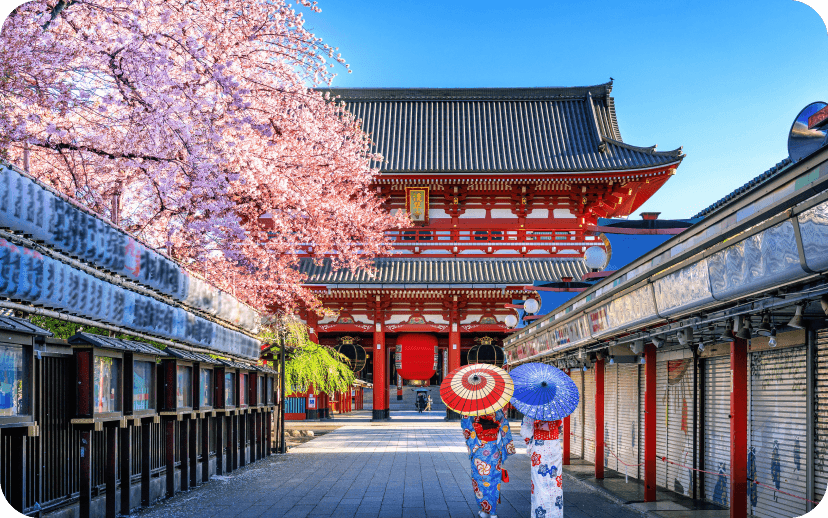
Japan rewards travellers like few other countries. Neon-lit skyscrapers next to thousand-year-old temples, capsule hotels and luxurious ryokans, bullet trains and zen rock gardens — 14 days is the ideal minimum for a first visit. This itinerary covers the essential cities without rushing
In 14 days in Japan cover Tokyo (3 days), Nikko or Hakone (1 day), Kyoto (3 days), Nara (1 day), Osaka (2 days) and Hiroshima with Miyajima (2 days). Budget from $2000 to $4500 per person including international flights.
Search flights to Japan (Tokyo) on Aviasales — compare all airlines including budget carriers.
🎌 What you need to know before visiting Japan
Trash and bins. There are almost no public trash cans in Japan — be ready to carry your rubbish with you for the day. This isn't a joke: responsibility for waste technically falls on the seller, which is why many Japanese people hand packaging back at the till. Carry a small bag — it'll save you more than once.
Queues and punctuality. Japanese people queue with remarkable order and patience — even a one-minute delay on a bus is treated as a real disruption. Don't try to cut or skip the line — it's seen very negatively.
Connectivity without a phone number. Tourist SIM cards and eSIMs in Japan provide data only, no calling — this comes down to a law tied to resident cards. The fix is simple: call through WhatsApp, Telegram, or LINE (the most popular messaging app among locals).
Shoes and socks. You'll be taking your shoes off often — temples, ryokans, some restaurants. Bring shoes that are easy to slip off, and keep your socks in good shape — it genuinely becomes part of how you present yourself in those moments.
💰 14-Day Budget Breakdown
Estimate your total Japan trip budget with our free Trip Cost Calculator.
Expense | Budget | Comfort | Notes |
Flights (round trip from Europe/US) | $700–1100 | $1300–2000 | Via Seoul, Beijing or Hong Kong |
JR Pass (14 days) | $430 | $430 | Essential for this route |
Accommodation (14 nights) | $280–560 | $840–1680 | $20–40 vs $60–120 per night |
Food (14 days) | $210–350 | $490–840 | $15–25 vs $35–60 per day |
Attractions & activities | $100–150 | $200–300 | Most temples $5–15 |
TOTAL per person | ~$1720–2590 | ~$3260–5250 |
💡 The JR Pass for 14 days costs $430 — it pays for itself on the Tokyo–Kyoto–Osaka route alone (otherwise $280 one way). Buy it before you arrive in Japan.
🗓 Day-by-Day Itinerary
Days 1–3 — Tokyo
Arrive at Narita or Haneda and head to Shinjuku — the neighbourhood that makes more sense as a base than anywhere else in Tokyo. The first evening is for orientation: Tokyo Tower or Skytree, both open late, both worth it for the scale of the city at night.
Pre-book your airport transfer via Kiwi Taxi — fixed price from Narita or Haneda Airport.
Day 2 covers the three neighbourhoods that define Tokyo's range. Asakusa in the morning — Senso-ji Temple and the Nakamise shopping street that leads to it, best before 9am when the light is good and the crowds haven't arrived. Akihabara in the afternoon for electronics and anime culture, whether or not that's your world. Odaiba by evening — the waterfront views of Rainbow Bridge are better than most people expect.
Day 3 is for the Tokyo that doesn't make the standard list. Harajuku's Takeshita Street in the morning, then the short walk to Shibuya Crossing — stand on the second floor of the Starbucks opposite and watch the world's busiest pedestrian intersection do its thing. End in Shinjuku at night, which needs no explanation.
Day 4 — Nikko or Hakone
A day trip rather than an overnight — though Hakone rewards staying. The Shinkansen reaches Nikko in two hours: the UNESCO-listed Toshogu shrines are the destination, and the mountain trails around the temple complex make for a proper afternoon. If Hakone is the choice instead, the ryokan experience ($120–200/night including dinner and onsen) is worth the extra cost — it's one of the things Japan does that nothing else prepares you for.
Days 5–7 — Kyoto
The Shinkansen from Tokyo to Kyoto takes 2.5 hours. Day 5 goes to Arashiyama: the bamboo grove before 8am (the later you arrive, the less it resembles what you came to see), and Tenryu-ji Temple's garden directly after. Day 6 belongs to Fushimi Inari — five thousand torii gates winding up a mountain. Go at 5am. This is not a suggestion. The Gion geisha district in the evening is quieter than midday and the wooden machiya townhouses along Hanamikoji Street look exactly as they should in low light. Day 7: Kinkaku-ji Golden Pavilion, Ryoanji rock garden, and an evening walk along the Higashiyama canal — one of the most atmospheric hours available anywhere in Japan.
Day 8 — Nara
One hour by train from Kyoto. The deer of Nara Park are genuinely wild and will eat crackers directly from your hand — a detail that never gets old regardless of how many photographs you've seen. The Great Buddha at Todai-ji is the largest bronze Buddha in Japan, housed in what was once the largest wooden building in the world. Kasuga Shrine in the afternoon, then return to Osaka or Kyoto for the evening.
Days 9–10 — Osaka
Osaka Castle first on Day 9, then Kuromon Market for street food — takoyaki at $3, kushikatsu at $2, the economics of eating well in Japan at their most generous. Day 10 is Dotonbori: the main canal street with the giant illuminated crab sign, the food stalls, the noise. Rooftop bars or Universal Studios in the evening depending on your appetite. Osaka is widely considered Japan's best city for food tourism, and the evening food crawl through Namba justifies the claim.
Days 11–12 — Hiroshima & Miyajima
The Shinkansen to Hiroshima on Day 11. The Peace Memorial Park and Museum is one of the most important museums in the world — set aside the full morning and go without a time constraint. The A-Bomb Dome across the river, preserved exactly as it was left. Day 12: ferry to Miyajima Island and the floating torii gate of Itsukushima Shrine — Japan's most photographed image, and one that earns the status. Stay overnight on the island and catch sunrise at the torii before the day-trippers arrive from Hiroshima. The difference between 6am and 10am at this spot is the difference between a memory and a queue.
Days 13–14 — Return & Departure
Return to Tokyo or Osaka depending on your outbound flight. Day 13 is for what's left: Tsukiji outer market for breakfast, department store food halls for last-minute gifts. Day 14: fly home. Buy onigiri and matcha tea from 7-Eleven for the journey — the convenience stores here are genuinely better than most restaurants elsewhere.
🏨 Where to Stay
Type | Price/night | Where | Recommended Options |
Capsule hotel | $20–35 | Tokyo, Osaka | First Cabin, 9Hours — the best chains |
Business hotel | $60–100 | All cities | Toyoko Inn, Dormy Inn — clean and practical |
Ryokan (traditional) | $120–200 | Nikko, Hakone | Includes dinner, breakfast, and onsen |
Airbnb apartment | $50–90 | All cities | Great value for stays of 3+ nights |
💡 Essential Tips
Get a Suica or Pasmo IC card — rechargeable card for metro and buses, also accepted at convenience stores
Convenience stores (7-Eleven, FamilyMart, Lawson) serve the best fast food in Japan: onigiri $1, hot noodles $2
Carry cash — Japan is still largely cash-based. 7-Eleven ATMs accept foreign Visa and Mastercard
Queue culture: popular Tokyo and Osaka restaurants have 30–90 min waits. Arrive at opening time
April–May (cherry blossoms) and November (autumn foliage) are the most beautiful but also most crowded
Download Google Translate with offline Japanese — restaurant menus outside cities are Japanese-only
Get a Japan eSIM via Airalo — works across all cities, activate before arrival.
Travel insurance via EKTA or Cherehapa — required for Japanese visa.
❓ Frequently Asked Questions
Do I need a visa for Japan?
Citizens of the US, EU, UK, Australia and most Western countries can enter Japan visa-free for up to 90 days. Russian and Chinese citizens need a visa — apply through your nearest Japanese consulate 2–3 weeks in advance.
Is the JR Pass worth it?
Yes, if your itinerary includes Tokyo–Kyoto–Osaka or more cities. The 14-day JR Pass costs $430 and pays for itself on just 3 shinkansen rides. For a Tokyo-only trip, skip it and use the IC card instead.
How much cash should I bring to Japan?
Budget $50–80 per day in cash for food, local transport and small purchases. Many restaurants and smaller shops are cash-only. Withdraw at 7-Eleven ATMs — they reliably accept foreign Visa and Mastercard.
What is the best way to get from Tokyo to Kyoto?
Shinkansen Nozomi or Hikari — 2.5–3 hours, ~$130 one way (or included in JR Pass). Far more comfortable than the overnight bus (8 hours, from $25) — the time saving alone justifies the cost.