Most Instagrammable Places in Georgia (2026)
The most photogenic spots in Georgia are concentrated in Tbilisi's Old Town — Abanotubani sulfur baths, the Clock Tower, Sololaki's painted courtyards and balconies — plus Narikala Fortress for panoramic views and Gergeti Trinity Church in Kazbegi for the iconic mountain shot.


Georgia's best photo locations are concentrated in Old Tbilisi — the sulphur bath domes of Abanotubani, the Rezo Gabriadze Clock Tower, the pastel courtyards and wooden balconies of Sololaki, and Narikala Fortress for panoramic views — plus the Holy Trinity Church of Gergeti in Kazbegi for the iconic shot with Mount Kazbek behind it.
Georgia has quietly become one of the most photogenic countries in the Caucasus — domed bathhouses, pastel balconies, cobblestone streets and dramatic mountain landscapes. These are the locations worth building your itinerary around — all of them fit naturally into our 7-day Georgia itinerary.
🏙 Tbilisi
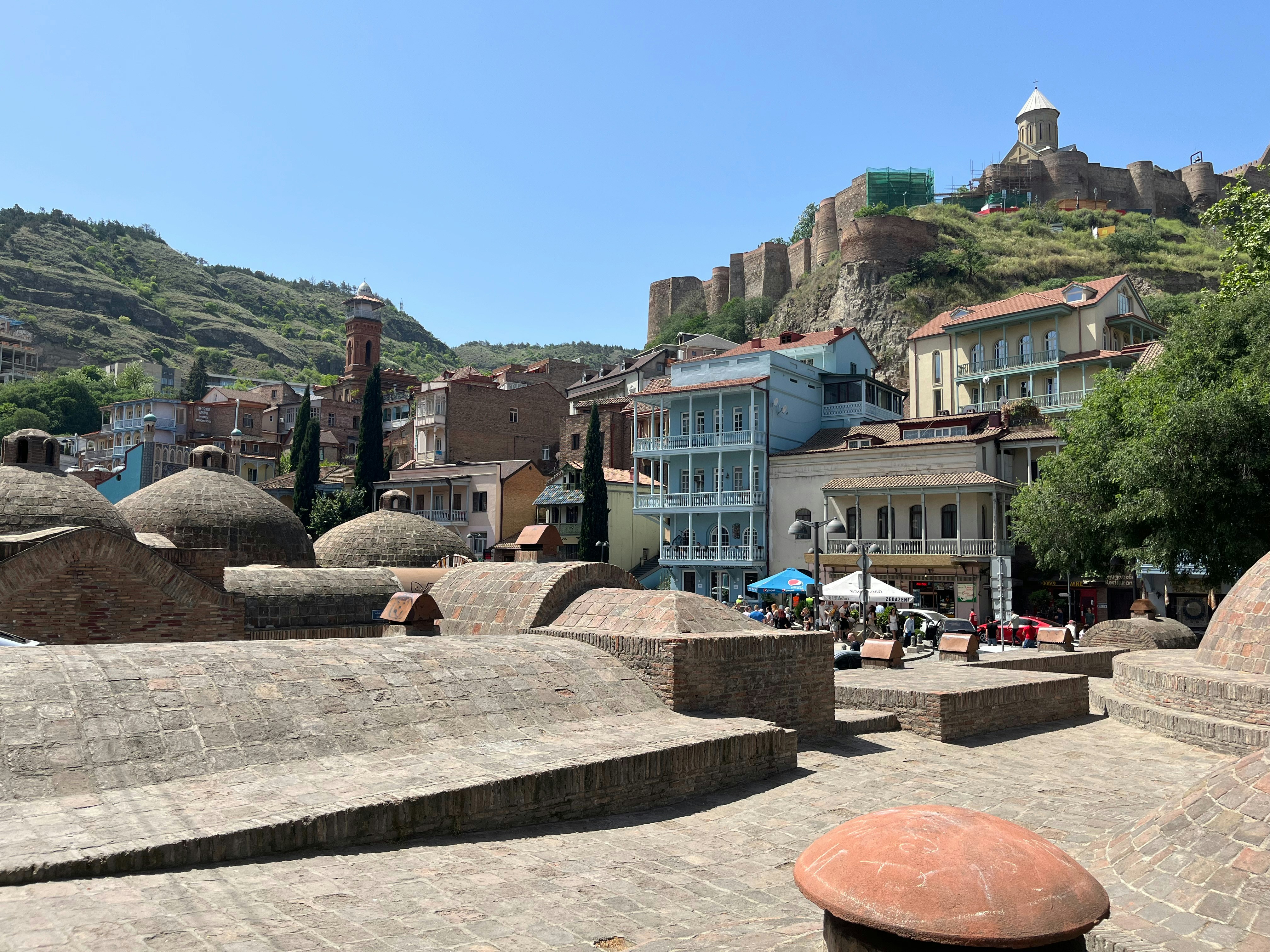
The brick domes of the old bathhouse district are the most recognisable image of Tbilisi. The neighbourhood sits at the foot of a cliff at the end of the Tsavkisistskhali river gorge — the geography alone makes the shot.
Best light: early morning before 8:30am — the domes are bathed in soft directional light and there are almost no tourists. In the evening the district is atmospheric but stays crowded late.
What to shoot: the domes from above at the Narikala Fortress viewpoint give the best angle on the whole district. At street level, look for the narrow alleyways between the bathhouses — old brick texture and wooden doors with peeling paint.
Practical tip: go inside one of the baths — the interior with steam and stone vaulted ceilings photographs surprisingly well on a phone. Orbeliani Baths ($7–15/hour) is the most beautiful from the outside, with a Persian-style tiled facade.
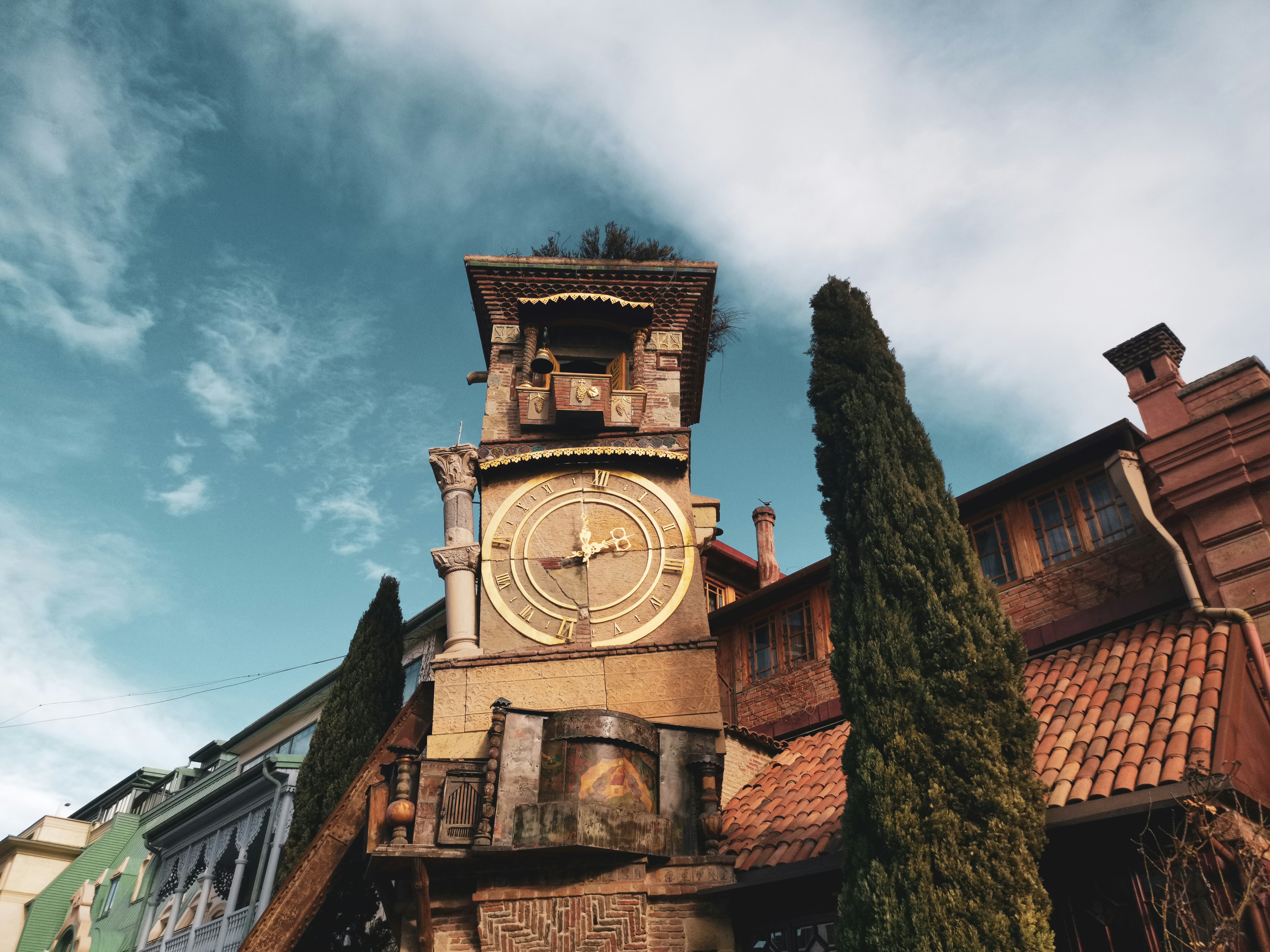
A deliberately crooked fairy-tale tower with a miniature mechanical performance every hour — an Angel rings the bell and small figures appear. Performances run at 12:00 and 19:00 — arrive 10 minutes early.
Best light: late afternoon in golden hour — the tower catches warm westerly light beautifully.
What to shoot: details — wrought iron elements, mosaic work, Georgian script inscriptions. For a full shot of the tower you'll need to press your back against the wall of the narrow street opposite — there's very little room to step back.
📍 Sololaki Courtyards and Balconies

Sololaki is a historic neighbourhood of carved wooden balconies, faded pastel walls and laundry lines — the real Tbilisi, largely untouched by tourist renovation.
Best light: morning, when the sun hits the eastern-facing facades. After 11am the narrow streets fall into shadow.
What to shoot: look for open courtyard gates — many are unlocked during the day. Inside you'll typically find multi-level balconies with flower pots and wooden staircases. Always ask permission before photographing residents — these are people's homes, not a set.
Practical tip: a wide-angle lens (or 0.5x mode on a phone) helps in narrow courtyards. A vertical frame conveys the height and layers of the balconies better than landscape.
📍Narikala Fortress and Old Town Panorama
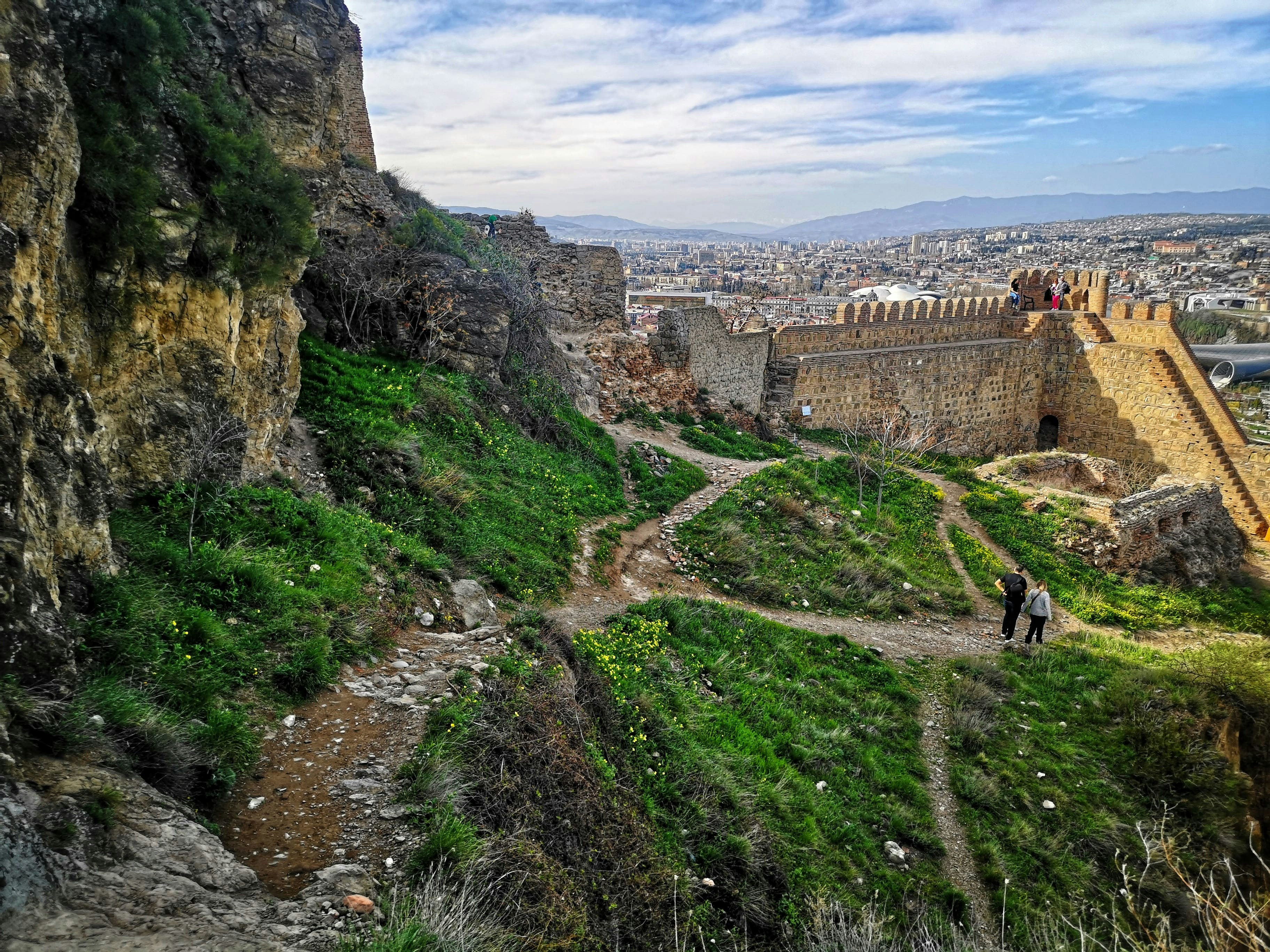
From the hilltop you get the classic panoramic view of the Old Town, the Mtkvari River below, the bathhouse domes and the modern city on the horizon. This is Tbilisi's signature shot.
Best light: evening before sunset — the sun drops behind the hill and bathes the entire Old Town in warm light. Golden hour here lasts about 40 minutes.
What to shoot: beyond the panorama — the fortress walls themselves, with trees growing from the ancient cracks and views down to the river. The cable car from the fortress down to the city is also worth photographing — the gondola over the rooftops makes a strong image.
How to get there: walk up through the Botanical Garden (~20 minutes) or take the cable car from Europe Square (1 lari, under $0.50).
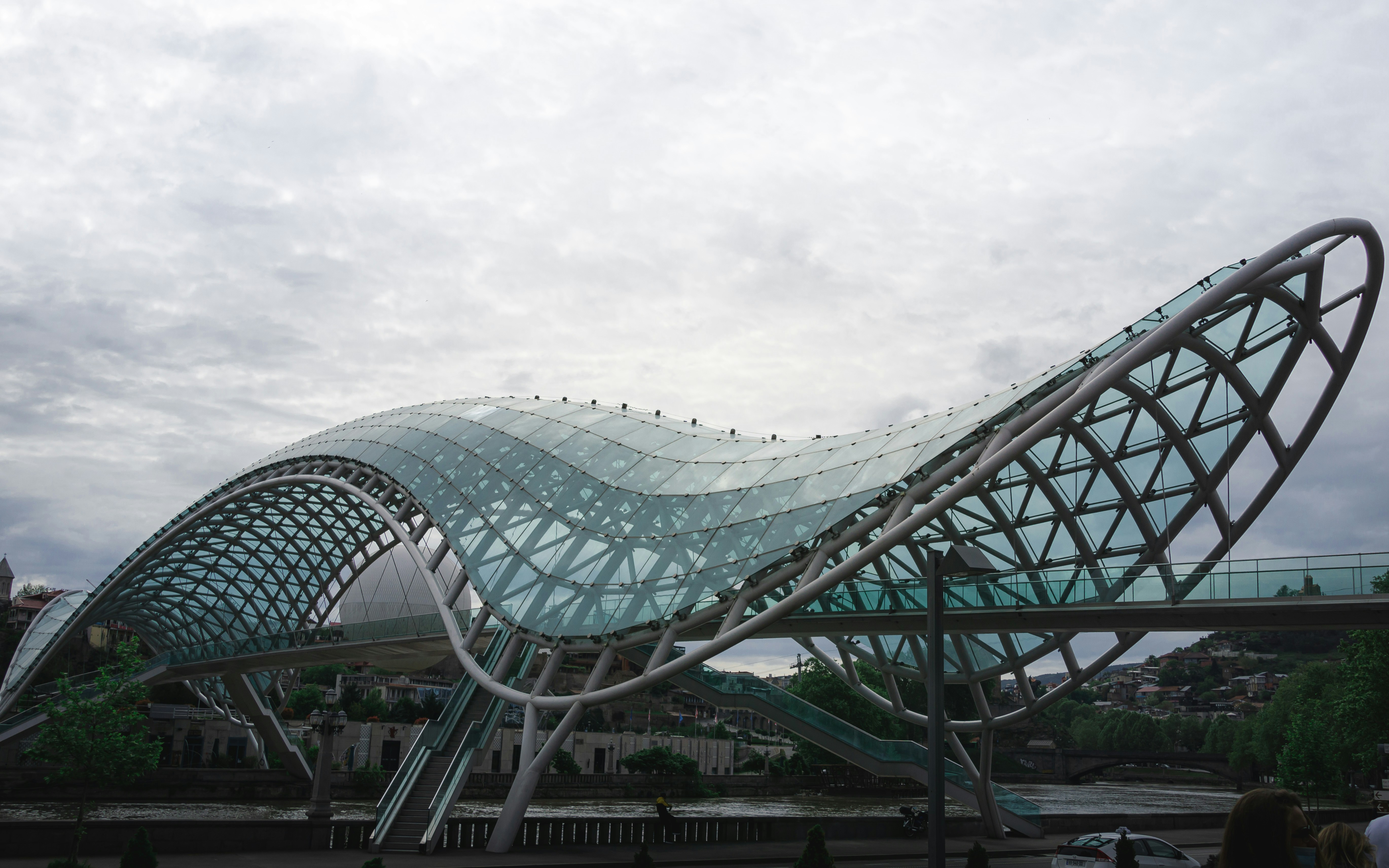
A glass and steel pedestrian bridge across the Mtkvari River, most effective after dark when thousands of LEDs create a pulsing light pattern across the canopy.
Best light: about an hour after sunset when the bridge lighting contrasts against a dark sky.
What to shoot: from the riverbank downstream you can get both the bridge and its reflection in the water in the same frame. Shooting from the bridge itself gives a symmetrical view of both embankments.
📍 Rustaveli Avenue and Freedom Square
The central avenue with the Opera House, National Gallery and 19th-century buildings is a less-photographed subject but offers excellent urban architecture. Freedom Square with the golden St. George on a tall column photographs well from directly below with a wide angle.
🏔 Beyond Tbilisi
📍 Gergeti Holy Trinity Church, Kazbegi
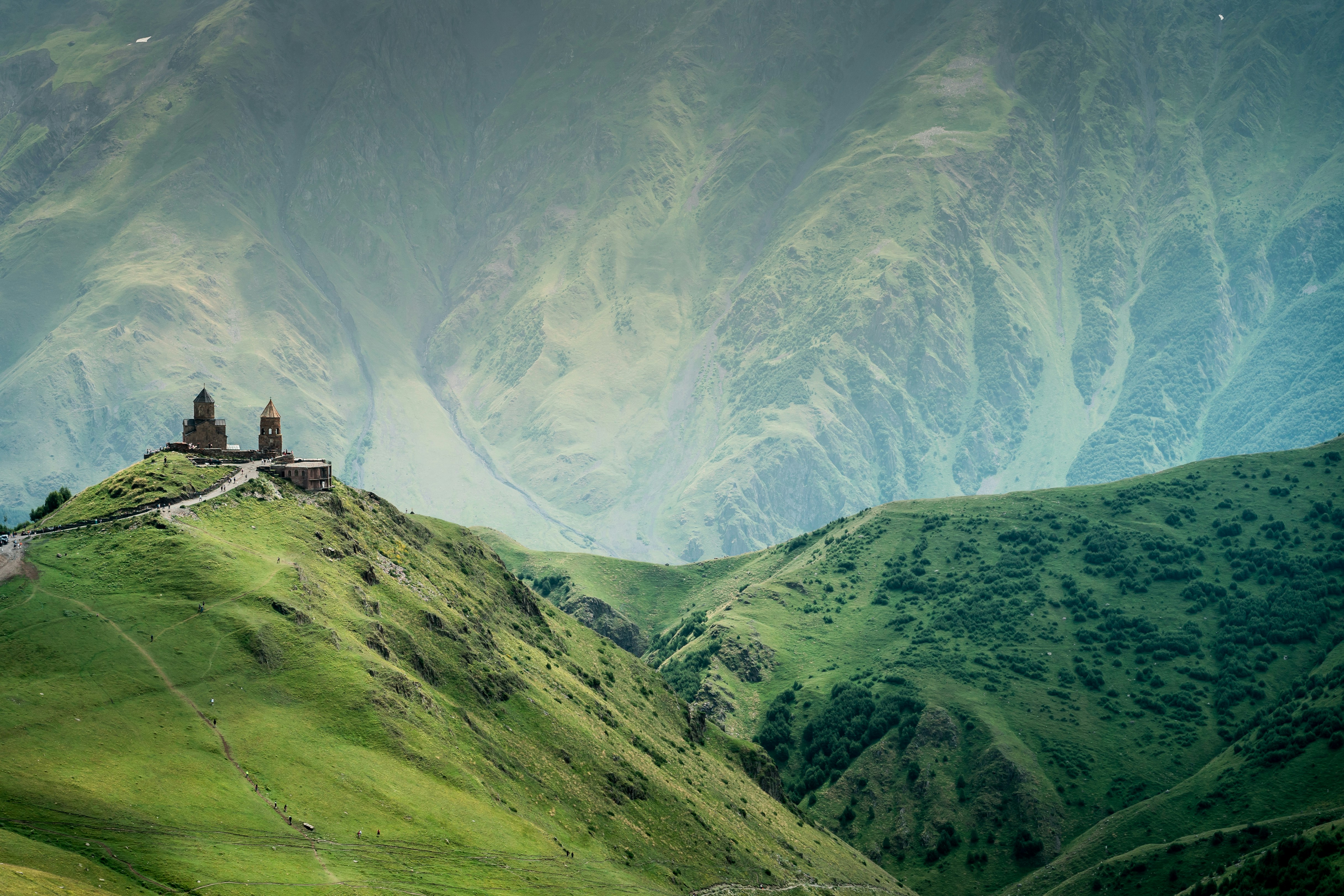
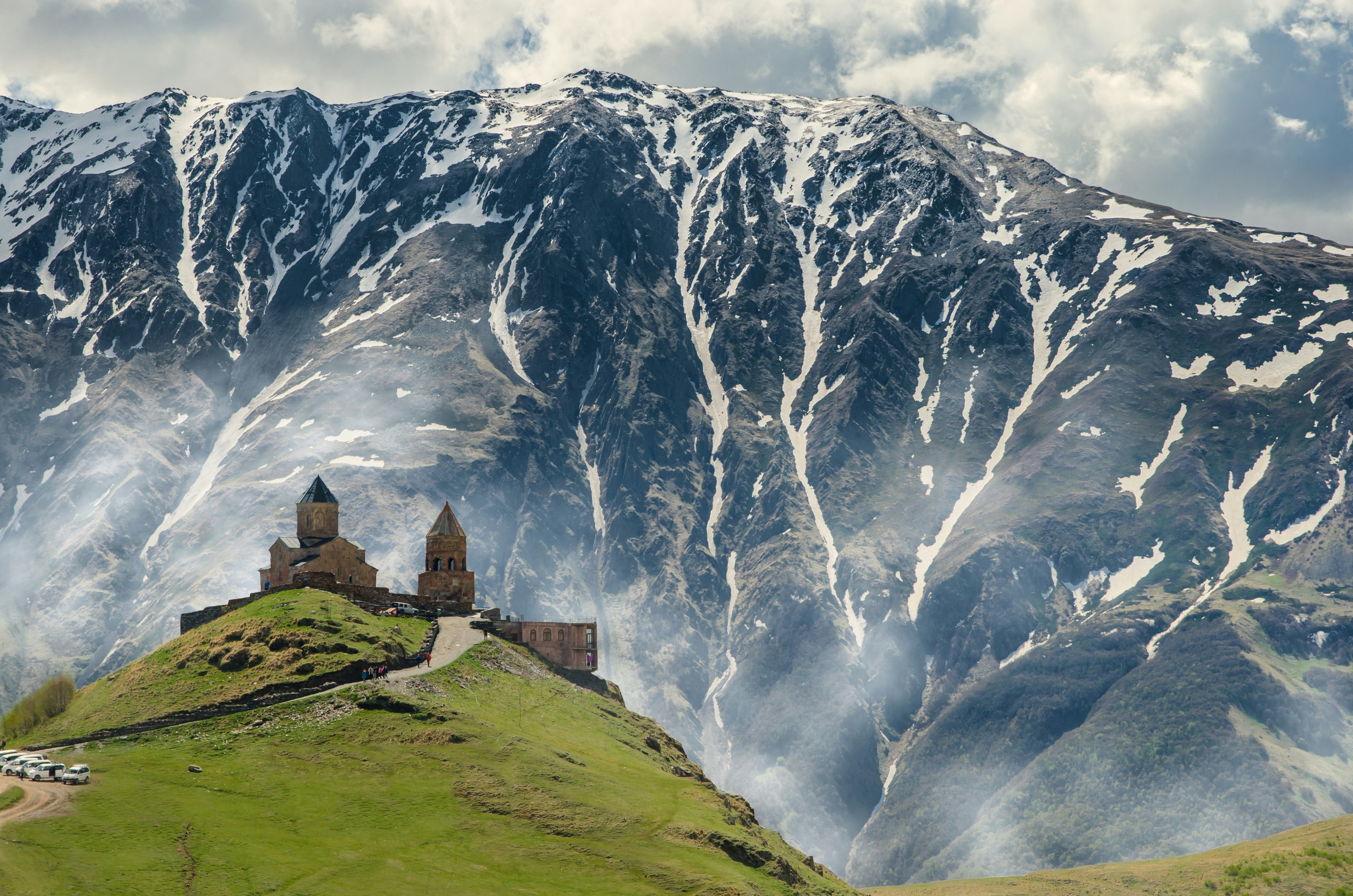
Georgia's most iconic shot: a small medieval church at 2,170m above sea level with Mount Kazbek (5,047m) directly behind it. The scale relationship between the tiny church and the enormous mountain makes the image feel almost unreal.
Best light: morning — the mountain is typically clear until around 11am, after which it tends to disappear into clouds. Arrive in Kazbegi the evening before and start the ascent before dawn for the best chance of a clear sky.
Getting up: 2–3 hour walk from Gergeti village, or a 4WD taxi (~15 GEL / $5–6 one way). In winter and early spring a 4WD is essential.
What to shoot: the standard frame has the church on the left, the mountain on the right, with the green hill beneath. For a different angle, climb above the church — it then sits against the valley below with the mountain behind you.
Practical tip: a telephoto lens (3x or 5x zoom) compresses the perspective and makes Kazbek appear visually larger relative to the church.
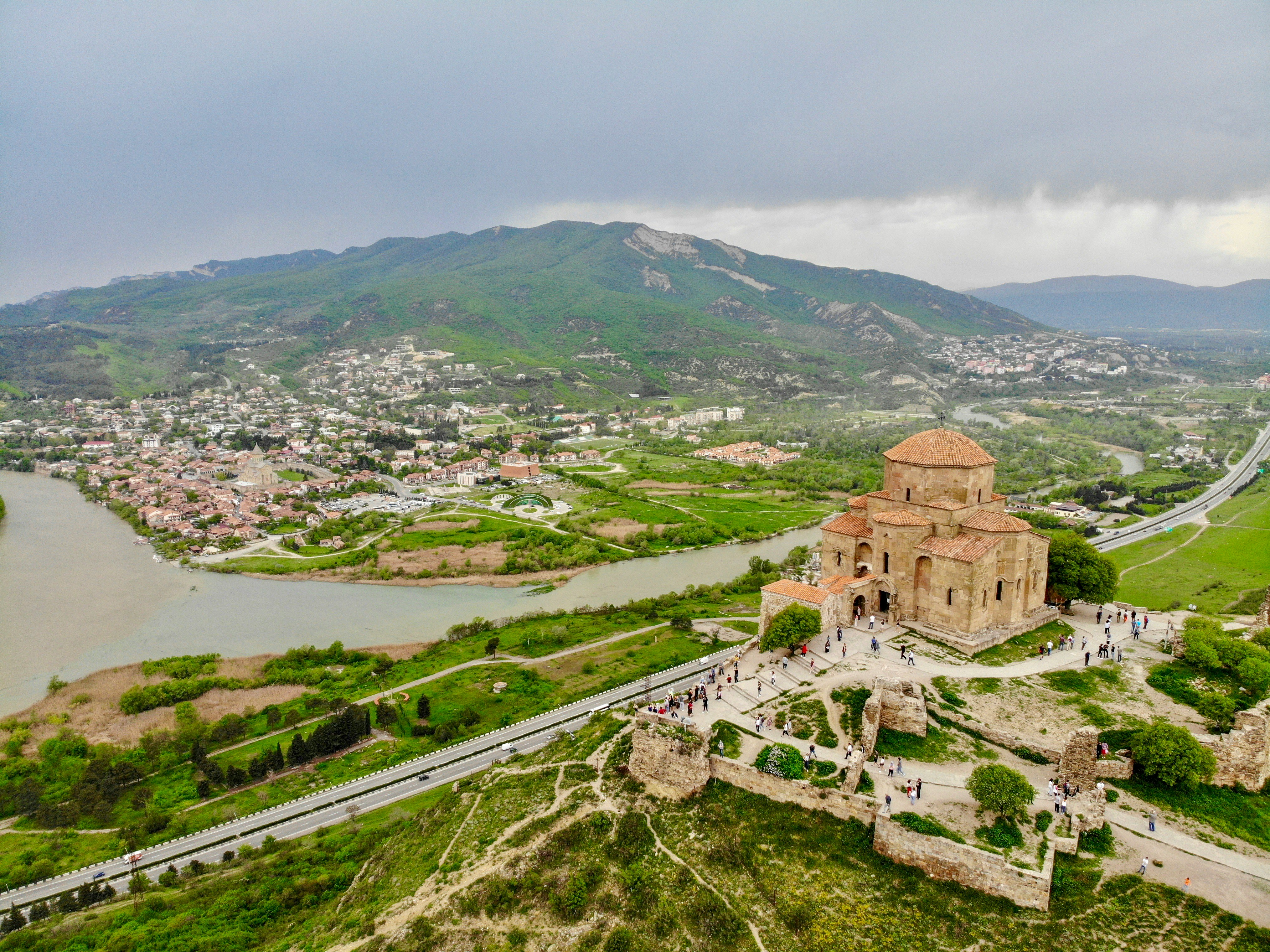
Positioned above the confluence of the Mtkvari and Aragvi rivers — a point where two rivers of different colours meet and flow side by side without mixing. This confluence is best seen from the monastery's terrace.
Best light: morning or evening — in the middle of the day the backlit rivers are hard to distinguish from above.
Getting there: 20 minutes from Tbilisi by car or marshrutka to Mtskheta, then a local taxi up the hill (~10 GEL / $3–4).
Georgian Military Highway
On the drive from Tbilisi to Kazbegi — one of the most scenic mountain roads in the Caucasus. Several essential photography stops:
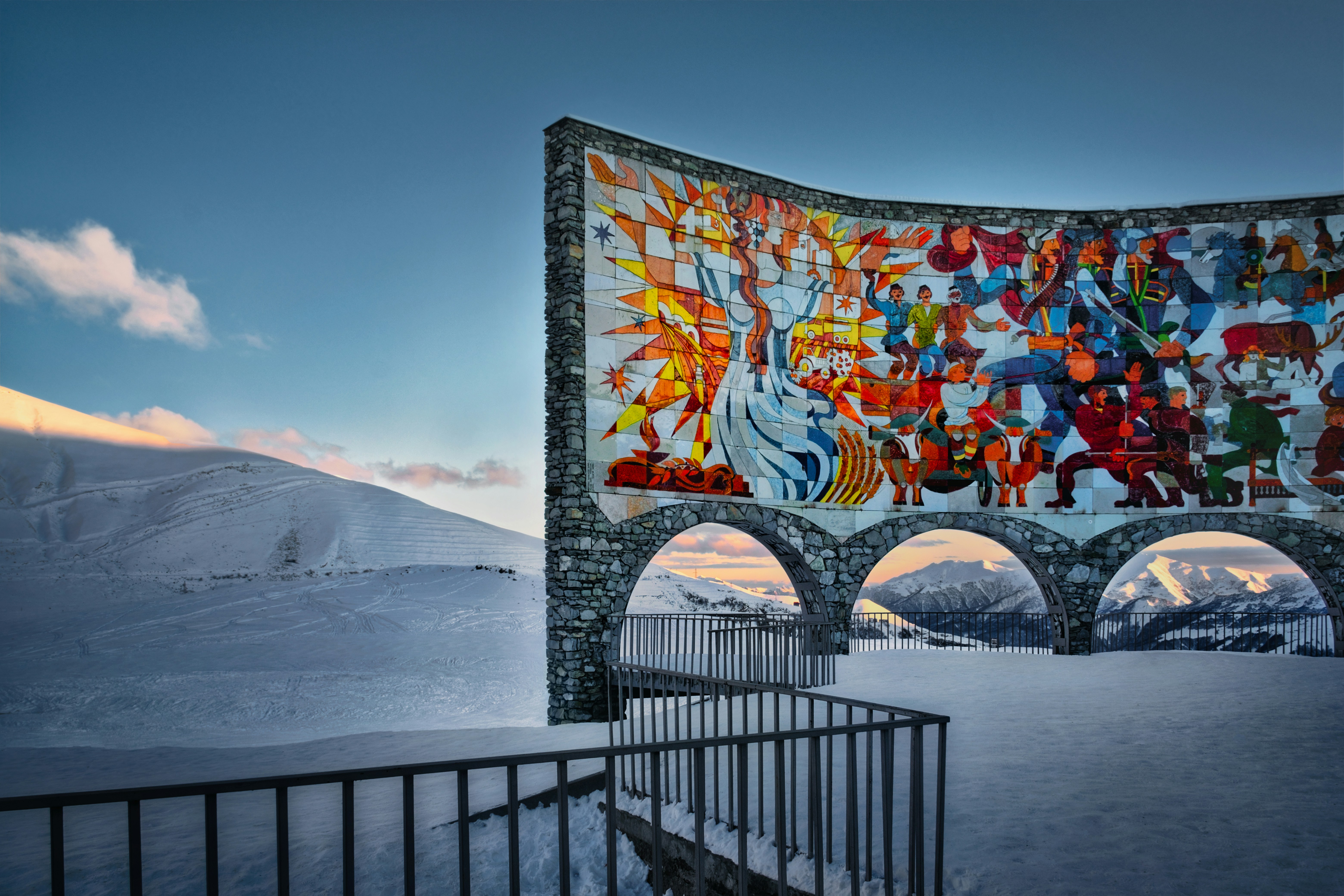
📍 Friendship Arch, Gudauri — a Soviet mosaic monument with a panorama over the Aragvi gorge. Best in morning before the valley fills with haze.
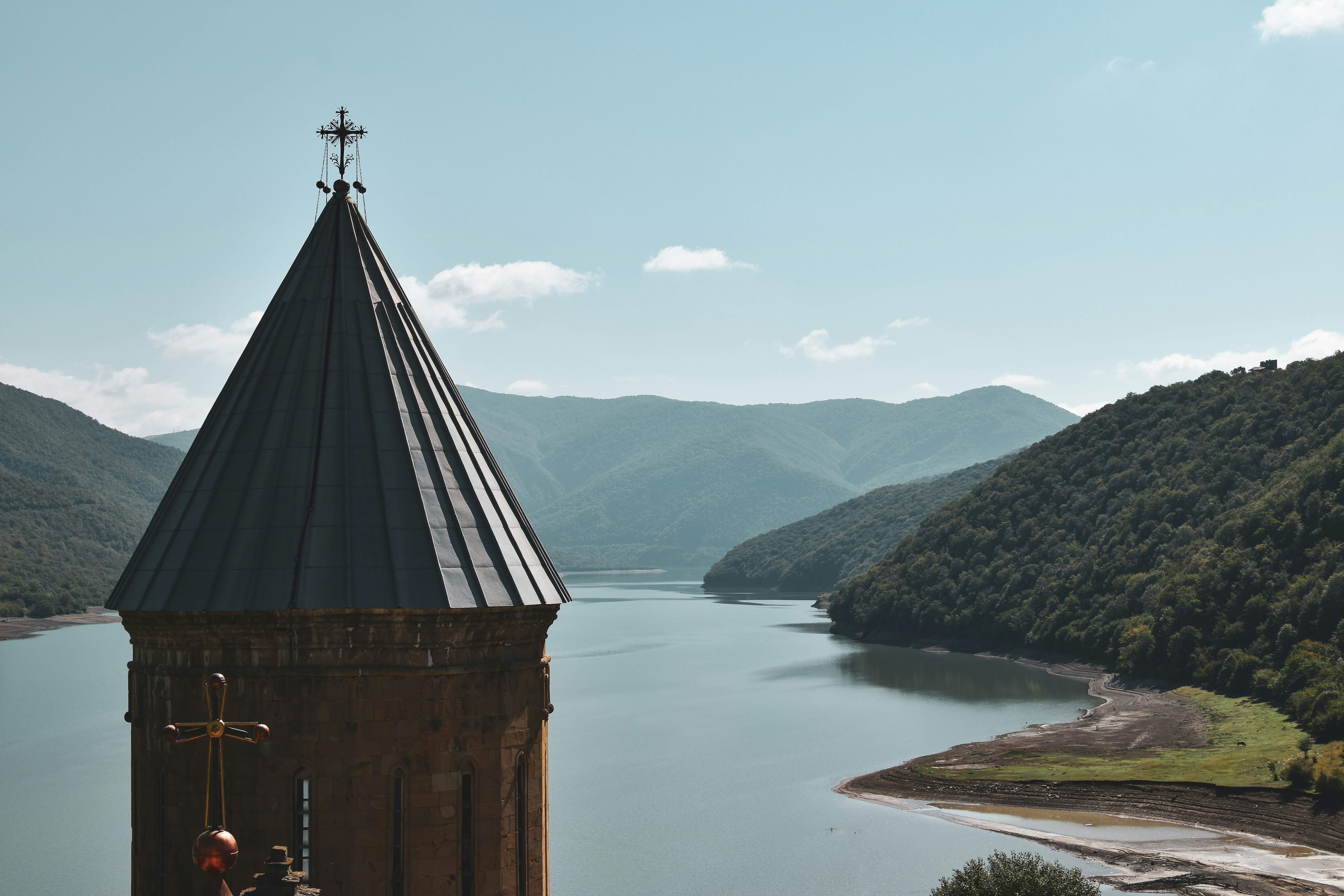
📍 Ananuri Fortress at the Zhinvali Reservoir — a medieval castle right at the water's edge. The turquoise colour of the reservoir makes the backdrop almost tropical. Arrive in the first half of the day before the sun moves behind the ridge.
Jvari Pass (2,395m) — in clear weather Mount Kazbek is visible from here. Usually clouded over by the afternoon.
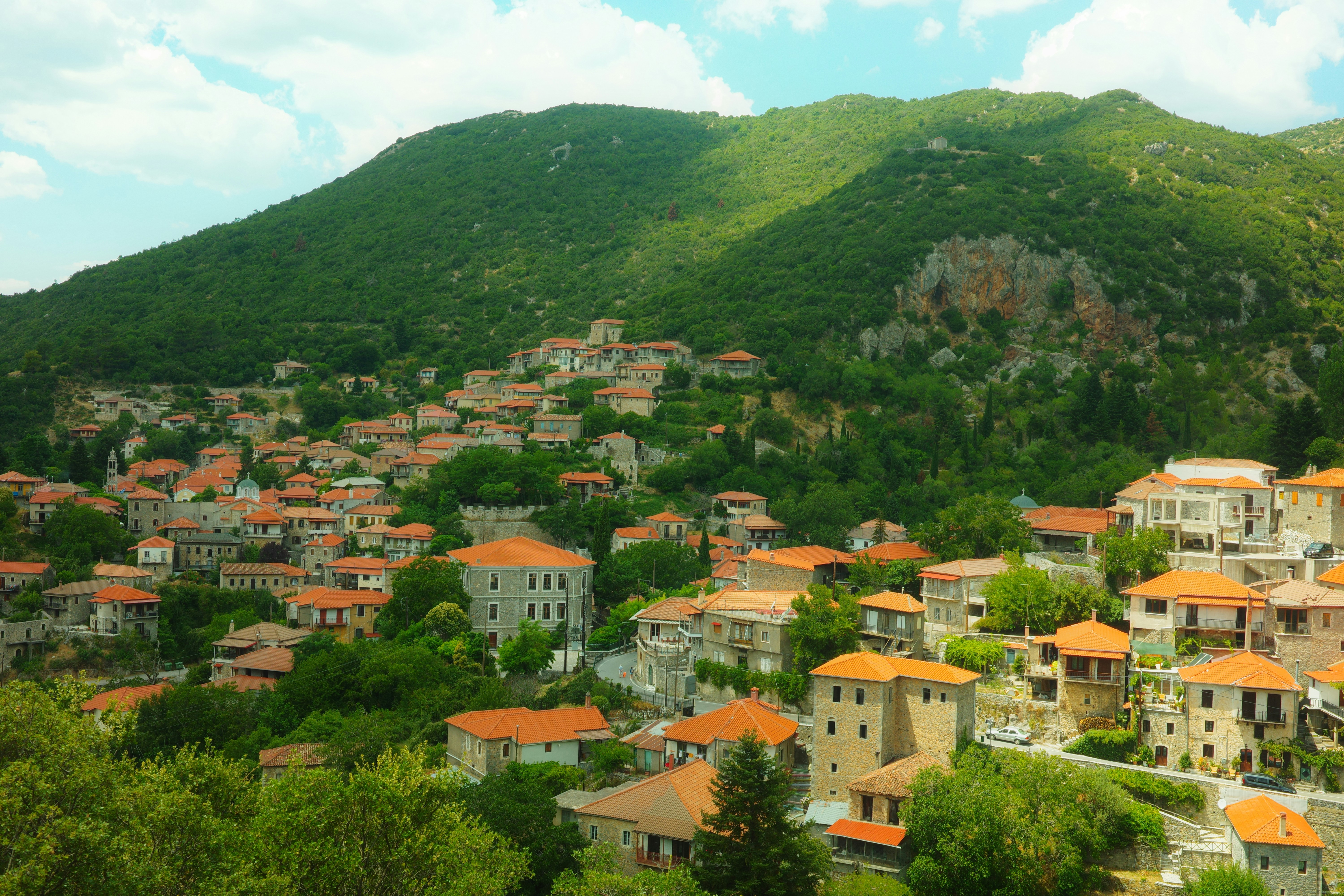
A small town in the Kakheti wine region with views over the Alazani Valley and the Greater Caucasus Range. Pastel facades, cobblestones, vineyards below — a completely different side of Georgia from the mountains.
Best light: evening — sunset over the Alazani Valley from the town walls is one of the best views in Kakheti.
What to shoot: the town walls with watchtowers, the valley panorama, and the flowering balconies in spring.
📅 When to Visit for Photography
April–May — spring colours, soft light, snow still on the mountains. Gergeti Church against a snow-covered Kazbek looks completely different from summer. Note that the Jvari Pass may still be closed in April.
June–July — long days, golden hour in Tbilisi around 8:45–9:00pm. Kazbek can disappear into clouds for several days at a stretch.
September–October — golden autumn in Kakheti (the vineyards), cleaner air and fewer tourists. The best season for Signagi and the wine country.
December–February — Kazbegi in deep snow, very few tourists. Gergeti Church in a winter landscape is a completely different and extremely powerful shot. You'll need a 4WD for the ascent.
💡 Photography Tips for Georgia
Before 9am is the best time for Abanotubani and the Old Town — soft light and almost no crowds
Sololaki courtyards are people's homes — always ask permission before photographing residents
Allow a full morning for Gergeti Church — 2–3 hours of hiking up, and the mountain is most often clear before 11am
Wide-angle (0.5x on a phone) is useful in Tbilisi's narrow streets and inside the bathhouses
Telephoto zoom (3x–5x) makes Kazbek appear larger relative to the church
Phone vs camera: a phone handles Tbilisi well. In Kazbegi in good light, a mirrorless or DSLR shows a clear advantage — bring one if you have it
Golden hour in Tbilisi — 40 minutes before sunset from Narikala Fortress. In summer sunset is around 8:45–9:00pm; in spring and autumn around 7:30–8:00pm
❓ Frequently Asked Questions
Can you take photos inside the sulphur baths?
Photography is not appropriate in communal baths where other guests are present. In private rooms (from $7/hour) you can shoot freely — the steam atmosphere and stone vaulted ceilings make for a striking image.
Is a special permit needed to hike up to Gergeti Church?
No — the path is open to everyone. The church is active, so shoulders and heads should be covered at the entrance (for women). There are no scarves provided at the door, so bring your own.
Is it safe to hike to Gergeti Church in winter?
Walking up in winter is not recommended — the slopes are icy. Local 4WD taxis with chains run year-round. Find them in Stepantsminda village: around 20–30 GEL ($7–10) one way.
How much time do you need in Tbilisi to photograph the main locations?
Two full days is the minimum for Abanotubani, Sololaki, Narikala and the Bridge of Peace in the right light. With three days you can add Mtskheta and have a second chance at the Bridge of Peace under different conditions.
🔗 This guide pairs naturally with our Georgia 7-Day Itinerary — most of these spots fall on Days 1-2 (Tbilisi) and Day 4 (Kazbegi).